
What Is the Difference Between Organic and Paid Traffic?
If you run a website, an online store, or any kind of digital business, traffic is the lifeblood of your growth. No visitors means no leads. No leads means no sales. Yet many business owners focus only on “getting more traffic” without fully understanding where that traffic comes from, and why the source matters just as much as the volume.
Two of the most important traffic sources in any digital marketing strategy are organic traffic and paid traffic. At first glance, they may seem similar. After all, both bring people to your website. But the way they work, how much they cost, how fast they deliver results, and how they impact long-term growth are very different.
This article breaks down the difference between organic and paid traffic in clear, practical terms. Whether you’re running an eCommerce store, a local service business, or a B2B company, understanding this distinction will help you make smarter decisions about your traffic acquisition strategy and marketing budget.
What Is Organic Traffic?
Organic traffic refers to visitors who come to your website through unpaid search results. These are people who find your site on search engines like Google, Bing, or Yahoo without clicking on an advertisement.
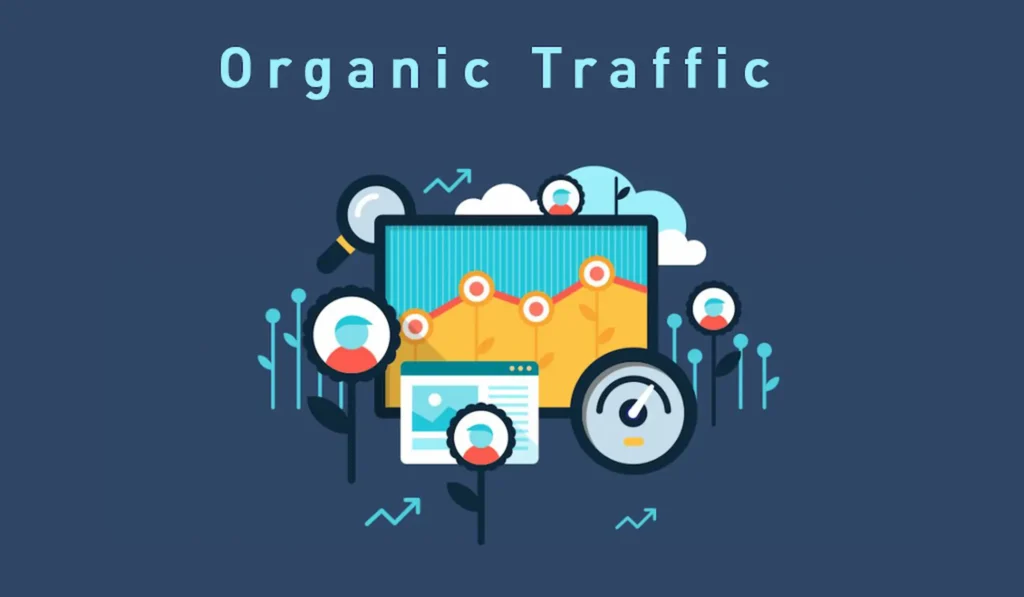
In simple terms, organic traffic is earned, not bought.
How Organic Traffic Works?
When someone types a query into a search engine, the platform shows a list of results based on relevance and authority. If your website appears in those unpaid listings and the user clicks on it, that visit counts as organic traffic.
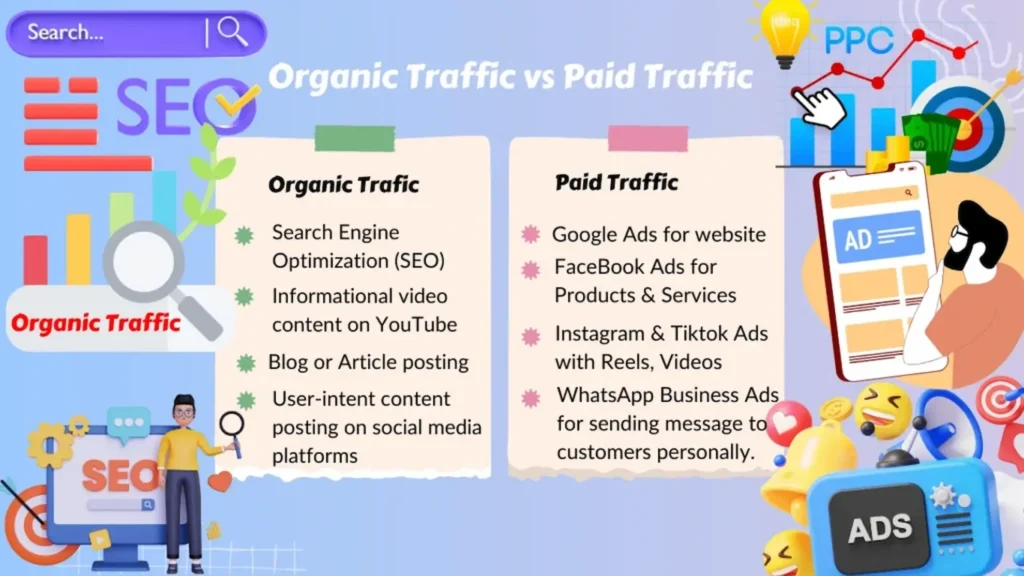
Organic traffic is driven by Search Engine Optimization (SEO), which includes:
- Keyword research
- Content creation and optimization
- Improving search engine rankings
- Technical website improvements
- Backlink building
- Enhancing search engine visibility
For example, if you own an eCommerce store selling running shoes and someone searches for “best running shoes for flat feet,” your blog post ranking on page one could bring consistent, long-term traffic growth without paying for each click.
Why Organic Traffic Is Valuable?
Organic traffic is often seen as sustainable website traffic because:
- It continues even when you stop actively investing (once rankings are strong).
- It builds credibility and authority.
- It typically has higher trust from users.
- It supports long-term brand visibility.
However, organic growth takes time. SEO is not an overnight solution, it’s a strategic investment.
What Is Paid Traffic?
Paid traffic refers to visitors who come to your website through online advertising. You pay a platform to show your ads to targeted users, and you are typically charged when someone clicks.
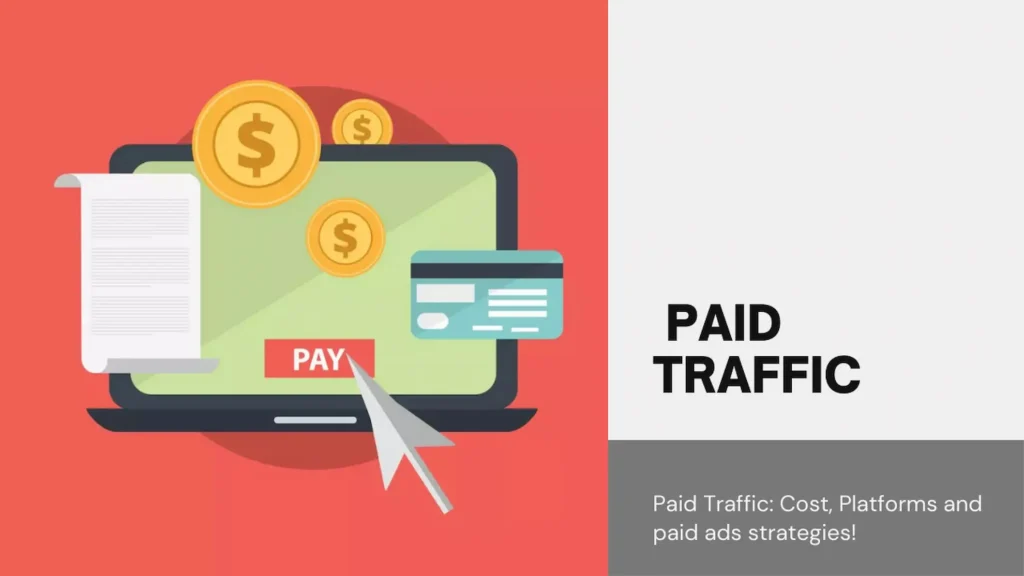
This is often called PPC (Pay-Per-Click) or cost-per-click advertising.
How Paid Traffic Works
Paid traffic is generated through platforms such as:
- Google Ads
- Facebook Ads
When you run Google Ads campaigns, for example, your website can appear at the top of search results as a sponsored listing. If someone clicks your ad, you pay a set amount based on competition and keyword demand.
Paid search marketing allows you to:
- Target specific keywords
- Select geographic locations
- Choose audience demographics
- Set daily or monthly budgets
The biggest advantage? Speed. You can launch a campaign today and start receiving traffic within hours.
Key Differences Between Organic and Paid Traffic
Although both channels bring visitors, they differ in several critical areas.
1. Payment Model
- Organic traffic: No direct cost per click.
- Paid traffic: You pay for each click or impression.
2. Timeline
- Organic: Slow to build but long-lasting.
- Paid: Immediate but stops when the budget stops.
3. Trust Level
- Organic listings are often trusted more.
- Paid ads are clearly labeled as sponsored.
4. Control
- Organic performance depends on search engine algorithms.
- Paid campaigns give you direct control over targeting and budget.
Understanding the SEO vs PPC debate is really about understanding timing, cost structure, and strategic goals.
Cost Comparison: Long-Term vs Short-Term Investment
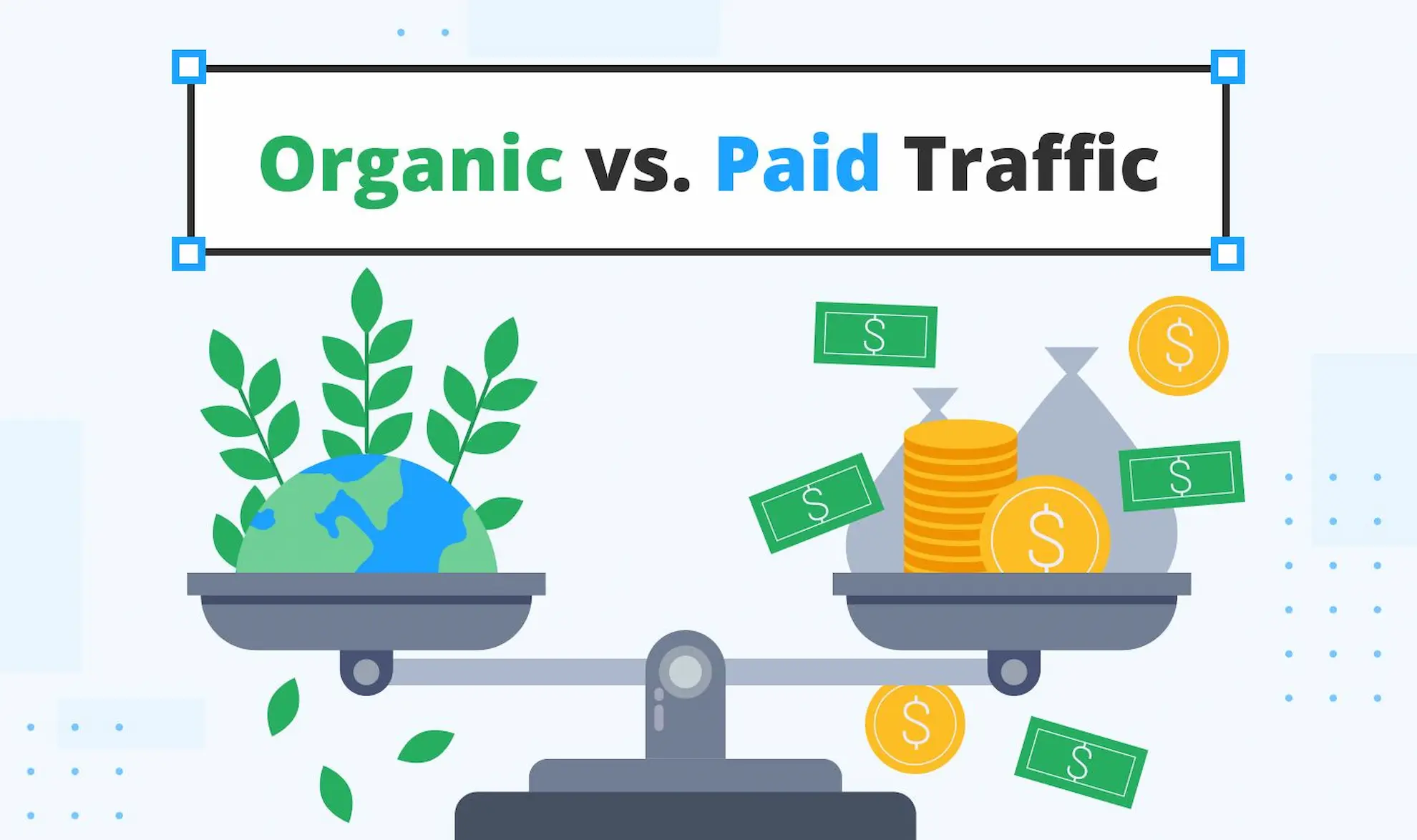
At first glance, paid traffic seems expensive because you pay per click. But organic traffic isn’t free either, it requires investment in content, technical improvements, and SEO expertise.
Organic Traffic Costs
- Content creation
- SEO tools
- Technical optimization
- Link building
- Ongoing maintenance
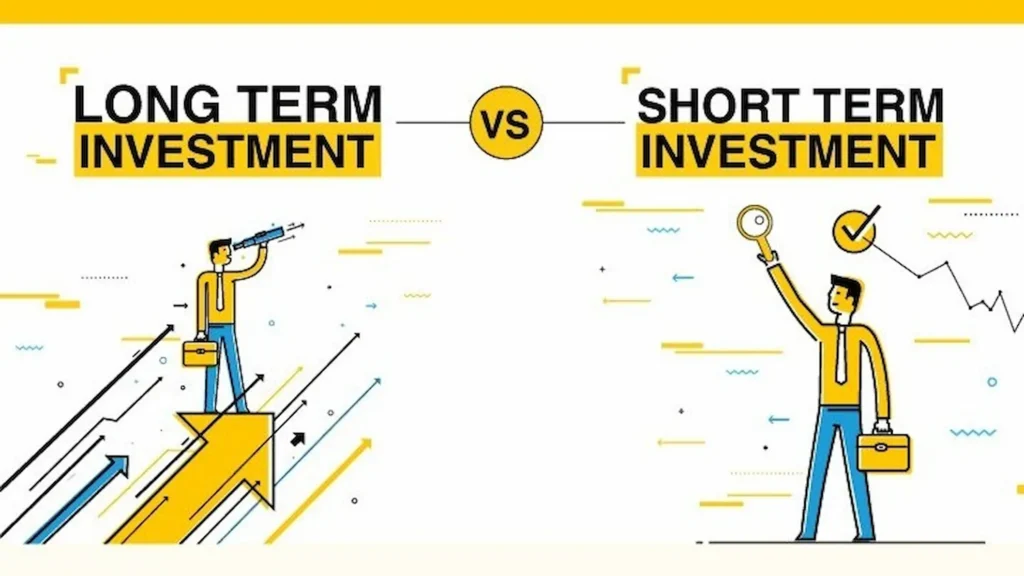
However, once your content ranks well, it can generate sustainable website traffic for months or years with minimal additional cost.
Paid Traffic Costs
- Cost-per-click advertising fees
- Ad management
- Testing and optimization
- Creative design
Paid traffic works like renting space. Once you stop paying, visibility disappears.
Organic traffic is more like owning property. It requires upfront investment, but it appreciates over time.
Trust and Credibility Factors
Trust plays a major role in conversion rates.
Users often skip ads and click on organic results because they perceive them as more credible. Ranking highly in search engine results builds authority. It signals that your website is relevant and trusted by the search engine.
For example:
- A law firm ranking organically for “divorce lawyer near me” may appear more trustworthy than a sponsored ad.
- An eCommerce brand ranking for “best skincare products” gains authority simply by being visible organically.
Paid ads, however, are powerful for brand exposure and awareness, especially for new businesses that lack established authority.
Speed of Results and Scalability
This is where paid advertising clearly wins.
Organic Traffic Speed
SEO may take 3 to 6 months, sometimes longer, to show meaningful improvements in search engine rankings. It requires patience and consistent effort.
Paid Traffic Speed
With paid search marketing, you can:
- Launch today
- Appear at the top of search results immediately
- Scale traffic quickly by increasing your online advertising budget
If you need immediate leads, for example, launching a new product, paid campaigns are often the faster solution.
However, scalability comes at a cost. The more competitive the keyword, the higher the cost per click.
ROI Comparison: Which Delivers Better Returns?
Return on investment depends on your goals, timeline, and industry.
Organic ROI
- Slower initial return
- Lower cost per acquisition over time
- Long-term traffic growth
- Strong compounding effect
Once rankings are established, each additional visitor costs almost nothing.
Paid ROI
- Immediate measurable results
- Easy tracking and testing
- Flexible targeting
- Can be very profitable if optimized
However, paid traffic ROI can shrink if costs rise or campaigns are poorly managed.
In many industries, the best returns come from balancing both channels rather than choosing one over the other.
When to Use Organic Traffic Strategies
Organic strategies make sense when:
- You want long-term authority.
- You aim for sustainable website traffic.
- You have time to invest in SEO.
- You want to reduce long-term dependency on ads.
Example: Local Service Business
A plumbing company investing in local SEO can rank for “emergency plumber in california”. Over time, this organic reach can generate consistent calls without ongoing ad spend.
Example: E-commerce Store
An online store publishing buying guides and product comparisons can attract search traffic that converts steadily month after month.
When Paid Advertising Makes More Sense
Paid advertising is ideal when:
- You need fast results.
- You’re launching a new product.
- You’re entering a competitive market.
- You’re running time-sensitive promotions.
Example: Product Launch
A new fashion brand launching a summer collection can use Google Ads campaigns and social media ads to generate immediate sales.
Example: Seasonal Business
A tax consultant during tax season may rely heavily on paid search marketing to capture high-intent users quickly.
How Organic and Paid Traffic Work Together
The smartest businesses don’t treat this as an SEO vs PPC battle. Instead, they combine both.
Here’s how they complement each other:
- Paid ads test high-converting keywords quickly.
- SEO focuses on ranking organically for those proven keywords.
- Organic content supports retargeting campaigns.
- Paid ads amplify high-performing organic content.
- Both improve overall search engine visibility.
For example, an eCommerce store might:
- Run ads to test which product keywords convert best.
- Create SEO-optimized content targeting those same terms.
- Reduce ad spend once organic rankings improve.
This creates a balanced traffic acquisition strategy that maximizes reach and profitability.
Real-World Examples for Businesses
eCommerce Store
An online electronics store invests in SEO to rank for “best wireless headphones.” Over six months, it gains steady organic traffic. At the same time, it runs cost-per-click advertising for high-margin products to boost immediate sales.
Result: Short-term revenue plus long-term authority.
Local Service Business
A roofing company ranks organically for local keywords while running paid ads after major storms when demand spikes.
Result: Stable year-round traffic with the ability to scale during peak seasons.
B2B Consulting Firm
A consulting firm publishes in-depth guides to build organic reach while using LinkedIn ads to target decision-makers directly.
Result: Strong brand positioning plus targeted lead generation.
Conclusion:
Organic and paid traffic are not competitors, they are strategic tools.
Organic traffic builds long-term authority, credibility, and sustainable website traffic. It lowers acquisition costs over time and strengthens your brand presence in search engine results.
Paid traffic delivers speed, precision, and scalability. It allows you to control your targeting, adjust budgets instantly, and generate leads quickly.
For most businesses, the smartest approach is:
- Use paid traffic for immediate visibility and testing.
- Invest in SEO for long-term traffic growth.
- Track conversion rates carefully.
- Adjust your online advertising budget based on performance.
- Build a balanced digital marketing strategy that evolves over time.
If your goal is predictable growth and maximum ROI, don’t choose between organic and paid traffic. Use both intentionally. When combined strategically, they create a powerful engine for brand visibility, customer acquisition, and sustainable revenue growth.
FAQ’s
1. What is the main difference between organic and paid traffic?
The main difference is how visitors reach your website. Organic traffic comes from unpaid search results through SEO efforts like content optimization, keyword research, technical improvements, and backlink building. Paid traffic comes from advertising platforms such as Google Ads, social media ads, and other sponsored listings where you pay for visibility.
In short, organic traffic is earned over time, while paid traffic is purchased for immediate exposure.
2. Is organic traffic really free?
Organic traffic does not require you to pay per click, but it is not completely free. You still invest in:
- Content creation
- SEO tools
- Website optimization
- Link building
- Technical improvements
The difference is that once your search engine rankings improve, you don’t pay for every visitor. Over time, organic traffic often becomes more cost-effective compared to cost-per-click advertising.
3. Which is better for small businesses: SEO or PPC?
It depends on your goals and timeline.
- If you need quick leads or sales, paid search marketing can deliver immediate results.
- If you want long-term traffic growth and sustainable website traffic, SEO is a better long-term strategy.
For most small businesses, a combination of both works best. Start with a small online advertising budget to generate leads while building organic visibility through SEO.
4. How long does it take to see results from organic traffic?
SEO typically takes 3 to 6 months to show noticeable improvements in search engine visibility. In competitive industries, it can take longer.
Organic growth is gradual, but once your site ranks well, it can generate consistent traffic without ongoing ad spend.
5. How fast can paid traffic generate results?
Paid traffic can generate results almost immediately. Once you launch a campaign, your ads can appear within hours. This makes paid advertising ideal for product launches, seasonal promotions, or time-sensitive offers. However, traffic stops when your ad spend stops.
6. Does organic traffic convert better than paid traffic?
Conversion rates depend more on user intent, website quality, and offer strength than traffic source alone.
That said:
- Organic visitors often trust websites that rank naturally, which can improve conversions.
- Paid traffic allows precise targeting, which can also lead to strong conversion rates when campaigns are well optimized.
Both channels can be highly profitable when aligned with the right audience and messaging.
7. Can I rely only on paid traffic?
You can, but it can be risky long term. Paid traffic depends entirely on your budget. If costs increase or competition rises, your customer acquisition costs may increase.
Building organic reach alongside paid campaigns reduces dependency on advertising and creates a more stable digital marketing strategy.
8. Is SEO vs PPC an either-or decision?
No. The “SEO vs PPC” debate is often misunderstood. It’s not about choosing one over the other. Instead, it’s about knowing when to use each channel.
Many successful businesses:
- Use paid ads to test high-performing keywords.
- Invest in SEO to rank organically for those keywords.
- Combine both for maximum search engine visibility.
This balanced traffic acquisition strategy often produces the best return on investment.
9. Which strategy delivers better long-term ROI?
Organic traffic generally delivers stronger long-term ROI because it continues to generate visitors without paying per click.
Paid traffic can produce excellent short-term ROI, especially for targeted campaigns. However, its profitability depends on careful budget management and optimization. The highest ROI usually comes from integrating both channels strategically.
10. How should I decide how much to invest in each?
Start by evaluating:
- Your business goals
- Your available marketing budget
- Your competition level
- Your timeline for results
If you need immediate revenue, allocate more to paid search marketing initially. At the same time, invest consistently in SEO to build long-term authority and sustainable website traffic.
Over time, as organic performance improves, you can rebalance your online advertising budget to maximize profitability and stability.